
Why Are Moss and Soil Ideal Subjects for Outdoor Microscopy?

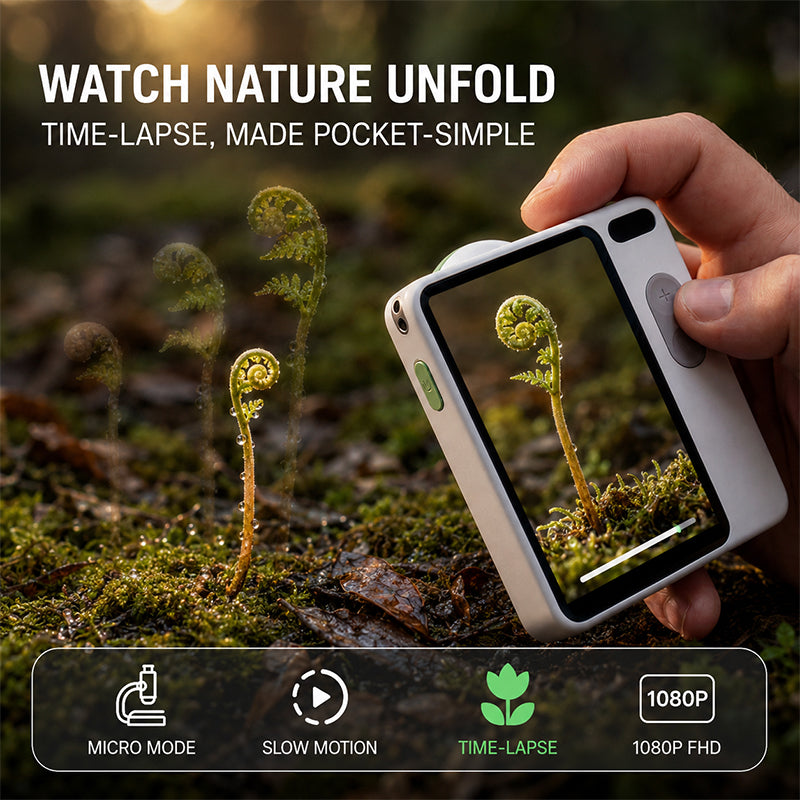
Unlike insects, moss and soil remain relatively still. This stability makes focusing easier in natural environments.
Moss may reveal:
-
Leaf-like micro structures
-
Spore capsules
-
Moisture-retaining fibers
Soil can show:
-
Grain size variation
-
Root fragments
-
Organic decomposition layers
-
Micro mineral particles
These textures remain visible long enough for controlled framing and image capture.
For hikers interested in practical setup, stabilization methods discussed in our microscope camera hiking setup guide can significantly improve results.
When Is the Best Time to Observe Water and Moist Surfaces?

Water droplets and damp environments produce strong contrast and structural depth.
Best timing includes:
-
Early morning dew
-
After rainfall
-
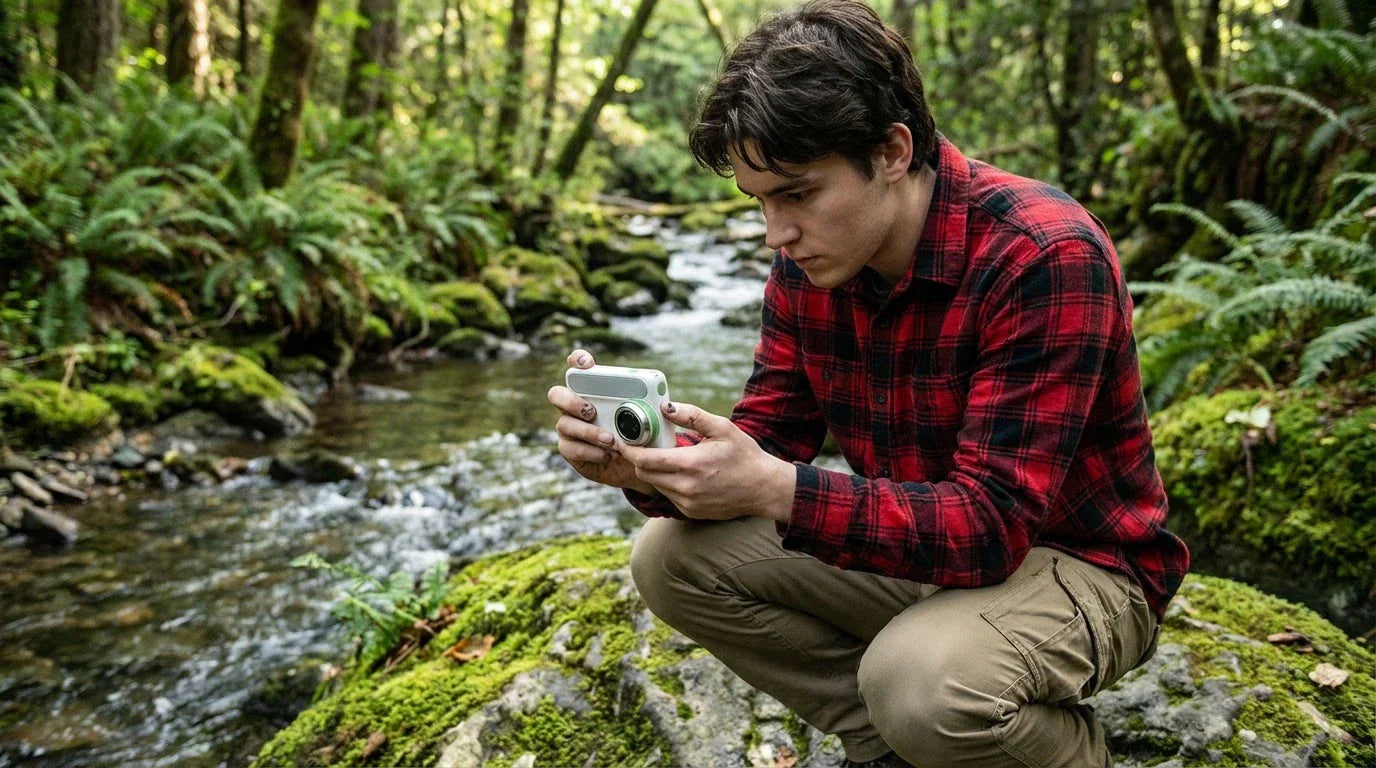
Near shaded streams
-
Humid forest floors
Overcast lighting typically produces more balanced exposure compared to direct midday sunlight, which can cause glare on reflective surfaces.
How Do You Capture Water Droplets Effectively?

Water droplets require angle control rather than extreme magnification.
Practical approach:
-
Position slightly off-axis from direct reflection
-
Reduce LED brightness if necessary
-
Focus on the edge of the droplet
-
Capture still images instead of extended video
Wind can alter droplet shape, so using natural wind barriers (tree trunks, rocks) helps improve stability.
If you're new to outdoor field use, reviewing the broader guide on microscope camera outdoor feasibility may help clarify equipment expectations.
What Makes Soil Textures Worth Documenting?

Soil is often overlooked but reflects ecological processes.
Close observation may reveal:
-
Sand vs. clay composition
-
Fungal threads
-
Decomposing plant fibers
-
Micro insect traces
This perspective shifts outdoor exploration from landscape-scale observation to structural detail.
Where Are the Best Outdoor Locations to Find Rich Textures?
Reliable locations include:
-
Forest floors under canopy
-
Stream banks
-
Moss-covered rock surfaces
-
Tree root zones
-
Garden beds after watering
Moist and shaded environments generally provide stronger texture contrast.
Dry, exposed areas may require lower magnification and careful lighting adjustment.
Common Mistakes to Avoid
Using Maximum Magnification Outdoors
Higher magnification reduces depth of field and increases focusing difficulty.
Disturbing the Subject
Touching moss or soil alters natural structure. Observing in place preserves detail.
Ignoring Light Angle
Shallow side lighting enhances surface relief more effectively than top-down illumination.
Final Thoughts
Water droplets, moss structures, and soil textures are accessible entry points into outdoor microscopy. They are stable, detailed, and widely available in hiking environments.
By focusing on these subjects, outdoor exploration becomes more deliberate and structure-oriented — extending the practical foundation established in our earlier guides on outdoor setup and trail use.