
How Does a Successful Macro Shot Work Step-by-Step?
Achieving a sharp macro image outdoors is a systematic process. It is less about "snapping" a photo and more about "building" a shot through careful preparation.
1. How Do You Choose the Right Environmental Conditions?
The best macro shots are often taken before the sun is high in the sky. Early morning offers two distinct advantages:
-
Minimal Wind: The air is typically stillest at dawn, preventing plants from swaying.
-
Subject Activity: Cold-blooded insects are often lethargic in the morning dew, allowing you more time to frame the shot.
2. How Do You Achieve Proper Stabilization?
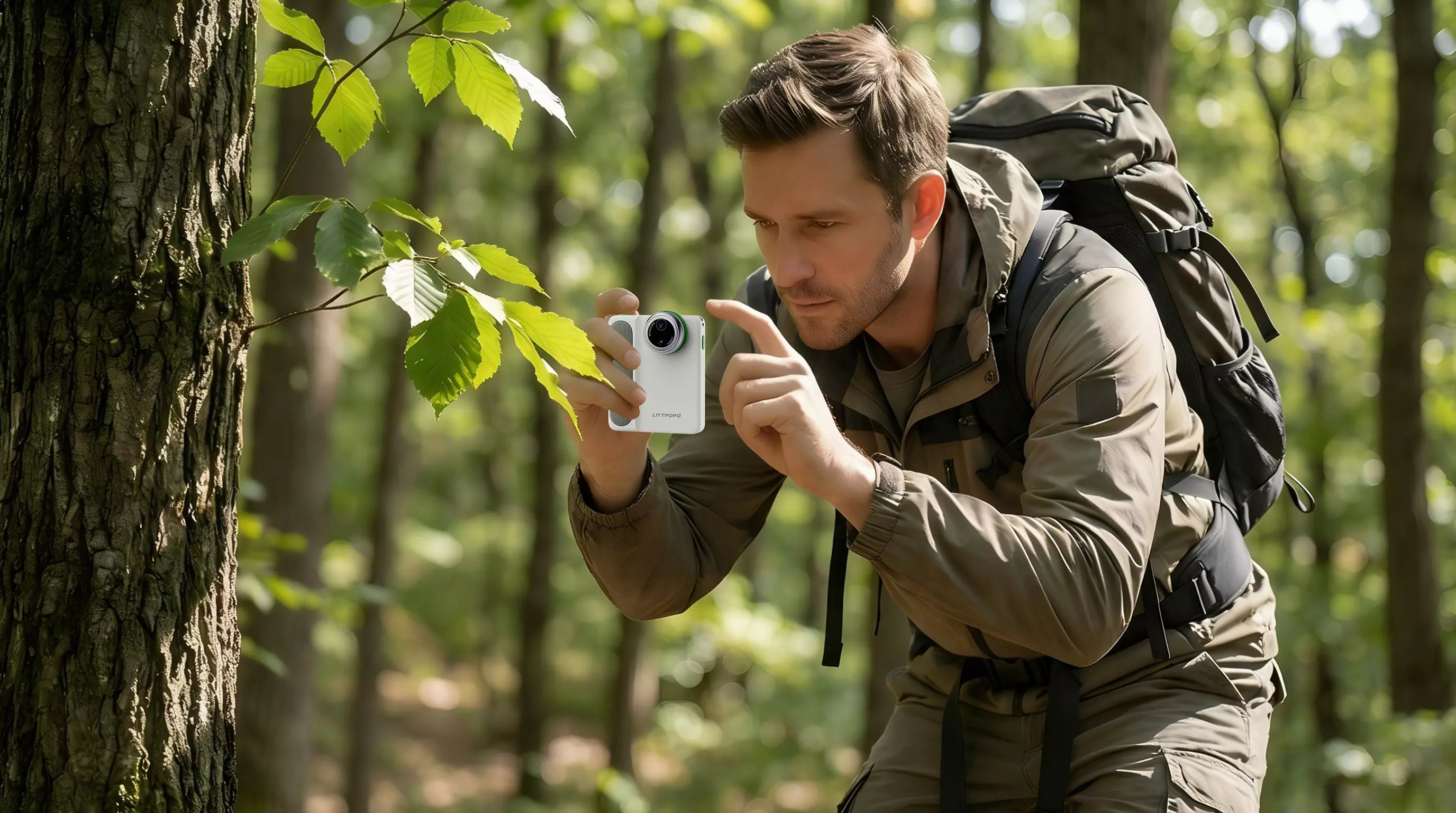
Since any movement results in blur, physical stabilization is non-negotiable. While a heavy tripod is ideal, it isn't always practical for those on long treks. When exploring rugged terrain, many photographers adapt by using a monopod or even resting their elbows on their knees. These field use considerations for hiking trips highlight that even lightweight setups require deliberate handling to ensure the sensor remains parallel to the subject.
3. How Do You Manage a Narrow Depth of Field?
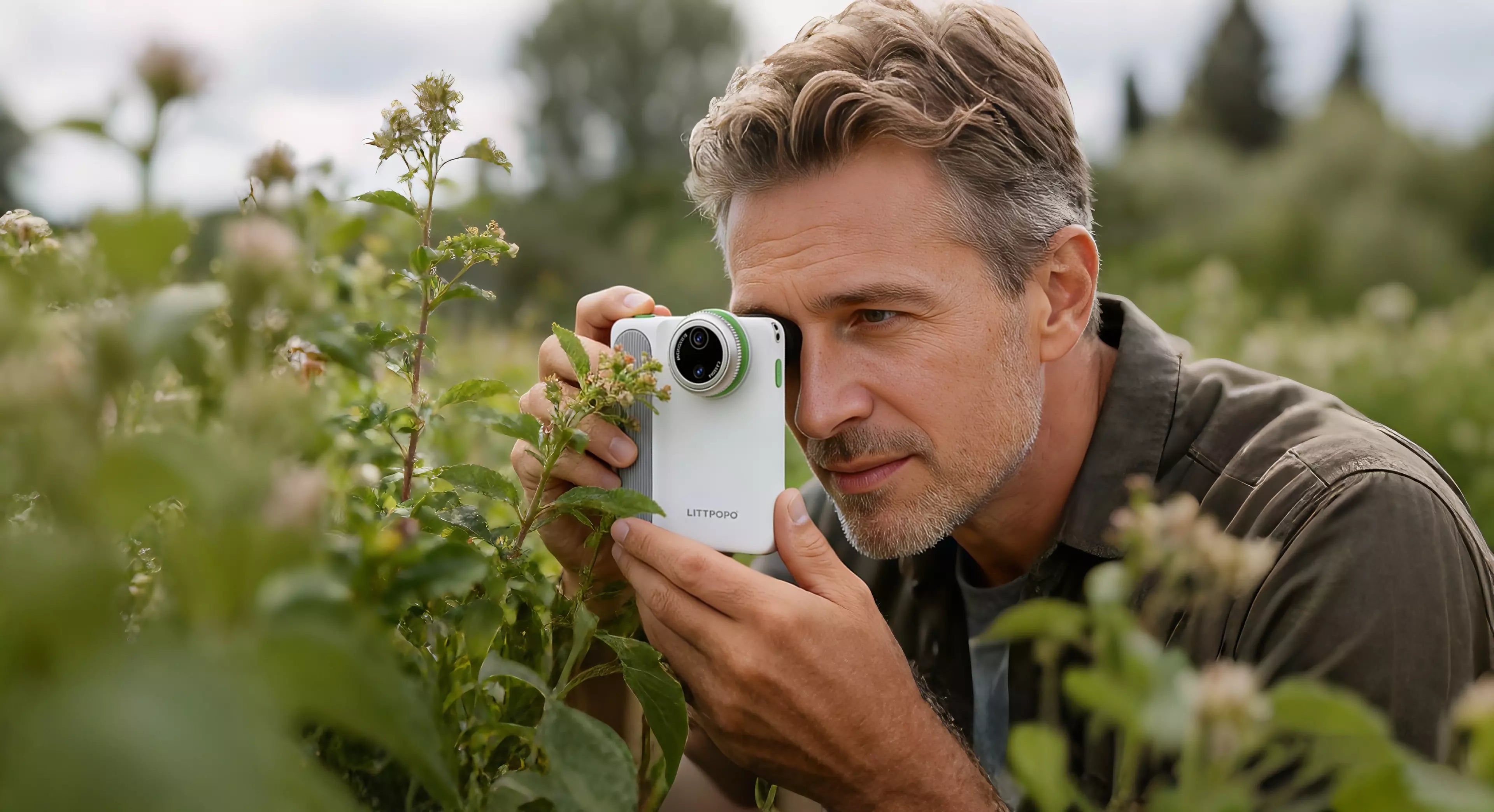
At high magnification, the "slice" of the image that is in focus is incredibly thin. To combat this, photographers often stop down their aperture to f/8 or f/11. While this increases the area in focus, it also reduces light, requiring a slower shutter speed or a higher ISO. A key technique is to align your camera sensor perfectly parallel to the most important part of the subject, such as a butterfly's wing, to maximize the available focus.
What Are the Most Common Mistakes Beginners Make?

Avoiding frustration in macro photography starts with identifying the habits that lead to "soft" or unusable images.
Why Is Relying on Autofocus Often a Mistake?
Modern autofocus is brilliant for portraits, but it often fails in the macro world. At close range, cameras tend to "hunt"—moving the lens back and forth without locking on. Beginners who rely on autofocus often find the camera focusing on a blade of grass behind the insect rather than the insect itself. Manual focus, paired with slight body movements forward and backward, provides the precision needed for tiny subjects.
Why Do New Photographers Ignore Subtle Subject Movement?
A common error is assuming a subject is "still." In reality, a flower is constantly vibrating due to wind, and an insect is breathing or twitching its antennae. Beginners often blame their lens for lack of sharpness when the culprit is actually a shutter speed that was too slow to freeze the micro-vibrations of the environment.
How Does Poor Background Control Ruin a Macro Shot?
In the rush to capture a rare beetle or a unique orchid, beginners often ignore what is happening behind the subject. A bright, out-of-focus highlight or a distracting branch can pull the viewer’s eye away from the main attraction. Taking three seconds to shift your physical position by an inch can simplify the background and make the subject "pop."
Why Is Light Management Frequently Overlooked?
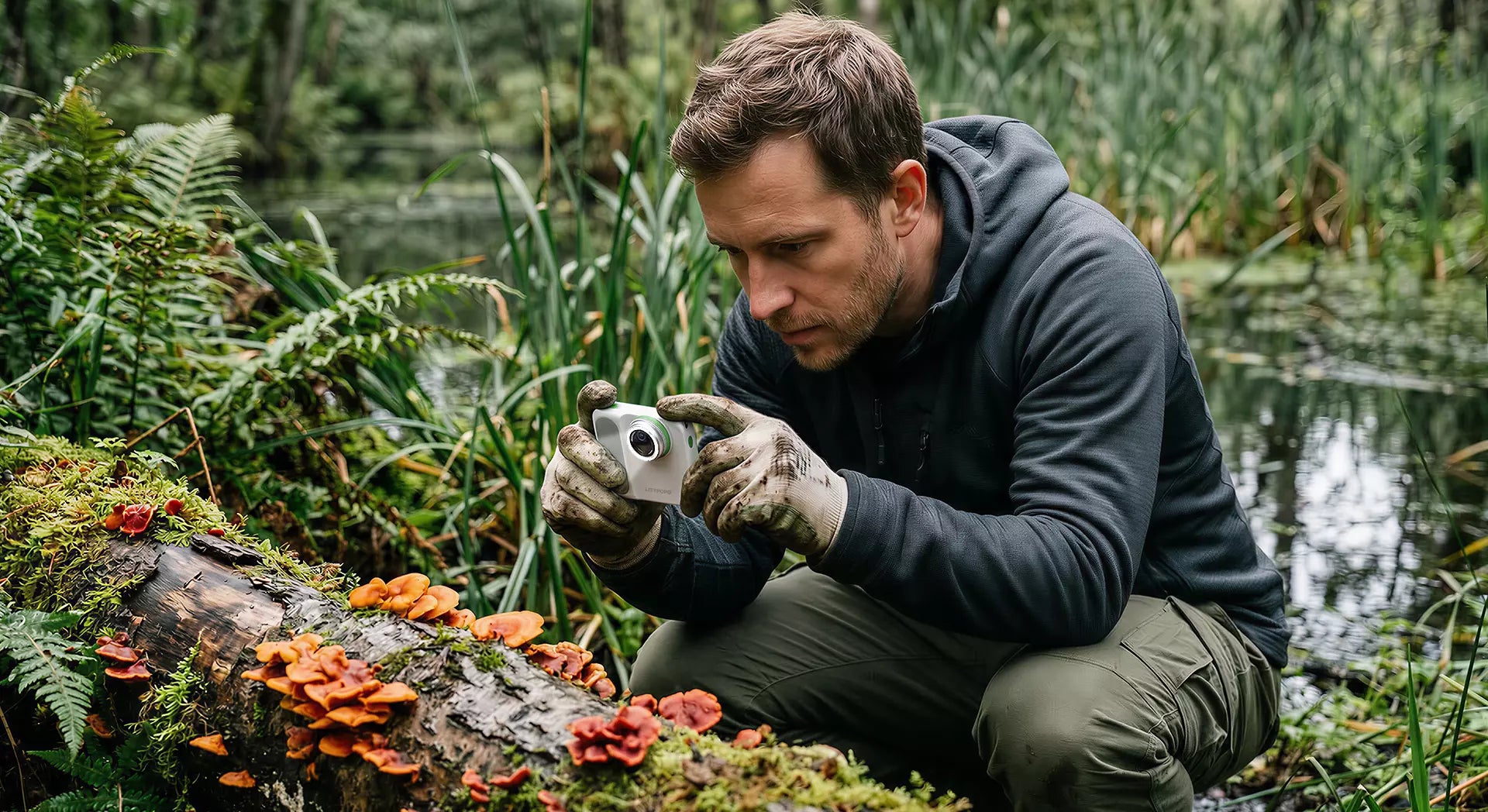
Harsh midday sun creates "hot spots" on reflective subjects like beetle shells or wet leaves. Beginners often shoot in direct sunlight, resulting in lost detail in the shadows and blown-out highlights. Using a simple handheld diffuser or even your own shadow to create even lighting can dramatically improve the tonal quality of the image. This is especially true when documenting microscope-level details in moss, water, and soil, where textures are easily washed out by poor light.
Who Should Pursue Outdoor Macro Photography?

Is It Suitable for Casual Nature Hikers?
Macro photography is an excellent companion for hikers who find themselves stopping to look at the "small stuff." If you enjoy identifying different types of lichen or observing the patterns in a leaf, macro adds a layer of discovery to your outdoor experience. However, it does require carrying extra stabilization tools or at least slowing down your pace significantly.
Is It Best for Technical and Detail-Oriented Photographers?
Yes. If you find satisfaction in technical perfection—calculating apertures, managing light, and mastering manual focus—you will find macro photography deeply rewarding. It is a discipline that rewards the "perfectionist" mindset.
Is It Useful for Ecological Documentation?
Macro is an essential tool for citizen scientists and educators. It allows for the clear documentation of:
-
Plant Pathology: Identifying fungal growth or pest damage.
-
Entomology: Recording insect life cycles and behaviors.
-
Geology: Capturing the crystalline structures of rocks and minerals in the field.