
For anyone passionate about documenting their journeys, travel photography has always felt like a constant tightrope walk. On one side, you want an imaging system with enough raw power and resolution to capture the fleeting, sensory moments of a trip—the exact visual notes that keep the memory of a place alive for years. On the other side, you absolutely do not want to spend a ten-mile hike or a full day navigating packed street markets with a massive, heavy camera bag tearing up your shoulder.
For a long time, carrying a bulky interchangeable-lens camera was considered a mandatory tax for serious travel journalists. The traditional mindset dictated that if you wanted real results, you had to pack extra battery bricks, multiple fragile focal elements, and a dedicated backpack just to hold your electronics.
But out in the real world, heavy gear introduces heavy friction. If you are exploring historic alleys from sunrise to sunset, tracking rugged backcountry trails, or dodging crowds at a local market, lugging around a massive setup quickly kills the spontaneous joy of the trip. You spend more time managing parameters and protecting fragile equipment than actually experiencing the culture around you.
That friction is exactly what drives the ongoing hunt for the best pocket camera on the market. The ultimate travel companion needs to keep things simple: it must slide effortlessly into a lightweight jacket pocket, weigh little enough to carry comfortably for sixteen hours straight, and deliver sharp, clear imagery that noticeably outclasses a standard smartphone sensor.
Redefining the Compact Framework: Finding the Story in the Details

When buyers research the best compact camera for travel, they usually fixate on a few predictable spec-sheet numbers: raw optical zoom range, megapixels, and pocket dimensions. Traditional premium point-and-shoots focus entirely on pulling the distant horizon closer to your eye.
While capturing a clean skyline against a sunset is a great baseline, true visual storytelling requires far more versatility. The soul of a destination isn't just written in its massive monuments or wide landscape vistas; it is etched into the immediate, tactile details that you encounter when you slow down your pace. It’s the crinkly moss patterns on the rocks of an ancient mountain temple, the complex thread patterns of a hand-loom textile in an open-air bazaar, the fragile, geometric structures of native plants in a remote botanical garden.
This is where the specialized layout of a dedicated best travel camera completely shifts the creative dynamic. Slicing past the standard, rehashed views that every tourist captures requires an optical system built for deep, close-range exploration. Sifting the frame down to the microscale allows you to document the hidden architecture of a destination—uncovering a parallel universe of design that casual travelers walk right past without ever noticing.
Hardware Breakdown: Why the Microcam X1 Re-Engineers the Mobile Workflow
The primary asset of a true pocket-ready system is a zero-friction footprint. Carrying complex, bulky camera gear often forces you into an academic, clinical mindset that separates you from your surroundings. A compact field camera needs to act as an intuitive extension of your own eyes.
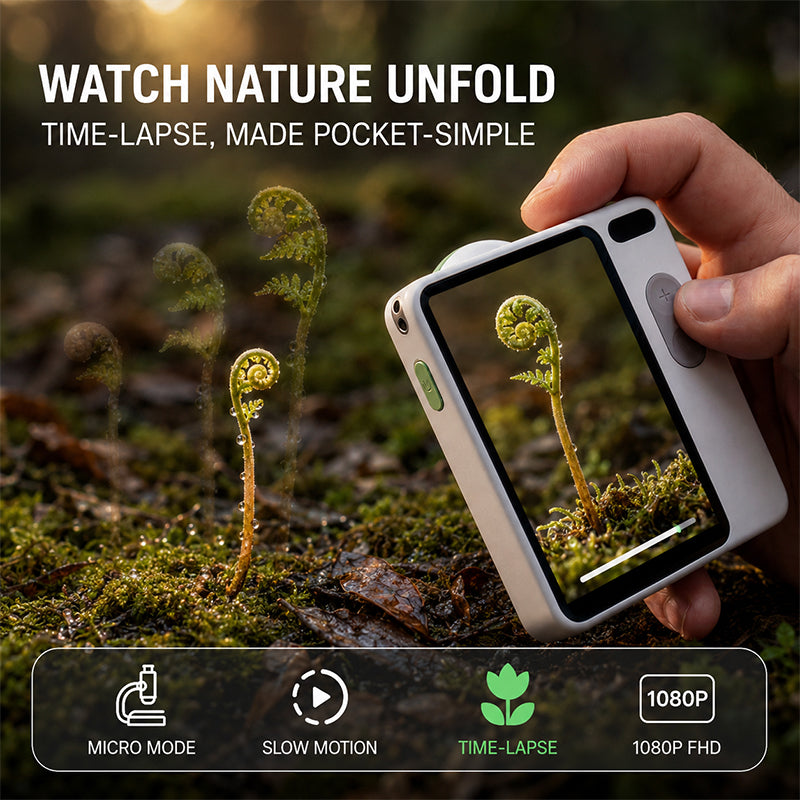
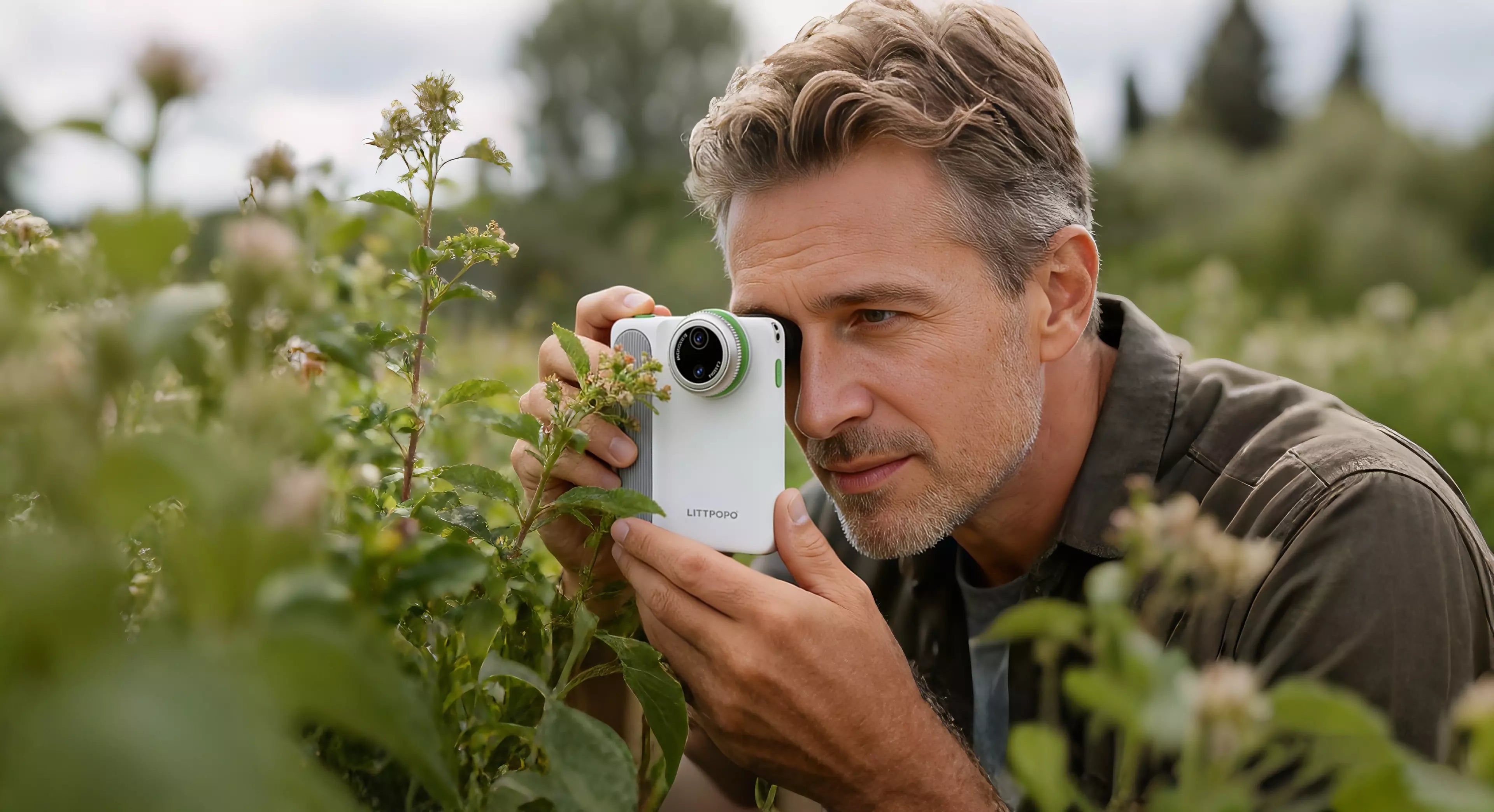
To hit that standard, modern travel systems like the Littpopo Microcam X1 replace the awkward, heavy handling of traditional equipment with highly specialized, field-ready optics. Squeezing high-resolution 12MP stills, 4K ultra-HD video capabilities, and high-magnification close-focus performance into an ultra-slim footprint ensures that the device can stay jammed inside a vest pocket or daypack until the exact millisecond a shot presents itself.
Traditional System VS Microcam Field Kit

| Traditional System | Heavy bags + Constant lens changes + Setup lag |
| Microcam Field Kit | Jacket pocket footprint + Instant dual-mode optics |
More importantly, the physical engineering is optimized specifically to handle the unpredictable layout of field travel. Traditional close-up macro gear is notoriously frustrating to operate outdoors; trying to adjust stiff, manual mechanical focus rings on a windy trail is a quick way to miss a shot entirely, as even a millimeter of movement throws your focus plane into a blur.
To solve this, advanced travel systems utilize responsive, screen-click autofocus—allowing you to simply tap your integrated mobile monitor to instantly lock your focus plane with absolute precision. Furthermore, the physical chassis directly combats the natural hand tremors that usually ruin high-magnification close-ups. By incorporating smooth lens guards that rest securely and flush against your subject, the hardware establishes a rock-solid, stable platform for razor-sharp files on the go. Armed with an innovative dual-lens system featuring a 180-degree twisting mechanism, you can transition from a standard environmental scene to a stunning 400x microscopic analysis in a single, fluid motion without ever swapping gear elements or exposing your sensor to trail dust.
Building a Balanced, Multi-Scale Travel Kit

No single piece of gear can satisfy every single shooting scenario perfectly. If your primary goal on a trip is tracking skittish wildlife from hundreds of yards away or capturing high-speed professional sporting events, your workflow will always demand a heavy, dedicated telephoto mirrorless camera system.
But if your style of exploration relies on agility, creative autonomy, and capturing the authentic, tactile textures of the places you visit, a lightweight pocket system changes everything.
Many modern outdoor journalists and travel content developers are building a highly effective, low-weight field configuration by pairing their primary smartphone with an agile, high-magnification pocket camera. You use your mobile device to document the broad, wide-angle street scenes and coordinate your transit data, while your specialized pocket optoelectronic system handles the intricate details, material compositions, and close-up natural science on site. This dual-layer approach ensures that you bring back a deeply textured, varied portfolio that tells a complete story of your journey from the macro down to the cellular level.
Practical Field Tactics for Pocket Documentation
 To bring back the cleanest possible files from your next journey, integrate these core field habits into your workflow:
Work the Sidelight: When documenting textures like old masonry, carved woodwork, or complex leaves, avoid overhead noon sun. Seek out low-angle morning or late-afternoon light that strikes the surface at an angle, producing long micro-shadows that give a sense of three-dimensionality to your subject.
Isolate Through Contrast When you seek for natural anchors within your environment for your close-up compositions, look for bold and contrasting color tones or clean geometric boundaries. Separating an intricate texture from a smooth, uniform background commands your viewer’s focus instantly.
Travel at a Mindful Pace The best travel shots are rarely made when you’re rushing from landmark to landmark. Dedicate specific blocks of time to simply stop moving, scan a single marketplace stall or trail border, and allow your eyes to adjust to the microscale details hidden in plain sight.
Final Thoughts
In the end, selecting the right gear package is a matter of how you want to experience the world. You can burden yourself with heavy packs, extra battery bricks, and interchangeable lens elements, or choose a nimble, streamlined setup that lets you move with effortless ease. By looking beyond the obvious, you can discover the secret architecture of your destination and turn a typical vacation into an authentic trip of biological and artistic exploration. Travel light, keep your eyes on the subtle details of the landscape and let the right pocket optics sharpen the focus of your travel story.