
Night photography has a unique way of completely rewriting your relationship with a landscape. The moment the sun drops below the horizon, an ordinary environment transforms. A familiar city skyline turns into a brilliant grid of high-contrast light trails, and a quiet trail out in the backcountry suddenly opens up into a sweeping view of the Milky Way.
But as many outdoor enthusiasts discover very quickly, capturing clean imagery after dark isn't as simple as pointing your camera at a shadowy scene and clicking the shutter. The night demands an entirely different creative state of mind, distinct technical parameters, and highly specialized optics.
Fortunately, heading into the dark is more accessible now than at any point in history. Modern camera sensors are cleaner than ever, automated focus tracking can lock onto a subject in near-total darkness, and manufacturers are releasing exceptional glass engineered specifically for low-light environments. Whether your passion lies in high-contrast cityscapes, wide-angle astrophotography, moody street scenes, or quiet midnight terrains, finding the optimal setup is simply a matter of aligning your gear choices with your target environment.
What Actually Matters Under a Dark Sky?
 The single biggest mistake intermediate photographers make when stepping into low-light work is putting 90% of their focus on the camera body while treating their lens selection as an afterthought. While an advanced sensor is a fantastic asset, a fast lens will almost always make a far greater difference in your final image quality than a brand-new camera chassis.
When you are tracking scenes with minimal ambient light, your system relies entirely on three core hardware capabilities:
High-ISO Sensor Cleanliness: Your camera needs a sensor capable of pushing to ISO 6400 or 12800 without drowning your shadow details in a sea of muddy digital noise.
Low-Light Autofocus Sensitivity: The camera’s focus arrays must be responsive enough to confidently lock onto shapes in dim conditions without constantly hunting back and forth.
An Ultra-Bright, Wide Aperture: This is where the lens comes into play. Running an f/1.4 or f/1.8 prime lens allows a massive, deluge-like amount of light to hit your sensor, giving you a sudden opening to capture previously impossible handheld shots.
The Low-Light Heavyweights: Top 2026 Camera Bodies

If you are looking to build a rock-solid foundation for after-hours shooting, three full-frame systems currently dominate the low-light landscape:
Sony A7 IV: The Versatile Gold Standard
When creators ask for a single, flawless recommendation that balances price, performance, and lens availability, it is incredibly hard to look past the Sony A7 IV. It has earned its massive popularity because it refuses to compromise. The combination of pristine raw resolution, exceptional dynamic range in the shadows, and access to the deepest lens ecosystem on the market makes it a premier best camera to take pictures at night for both urban nightscapes and deep-sky astrophotography.
Nikon Z6 III: Engineered for the Shadows
Nikon has built a legacy on its ability to preserve true, mathematically faithful color and micro-details within deep shadow zones, and the Nikon Z6 III builds beautifully on that reputation. Featuring a highly advanced image processing engine, its autofocus acquisition handles near-pitch darkness with ease. If your creative style involves pulling rich details out of high-contrast night horizons without generating digital grain, this system is a certified low-light workhorse.
Canon EOS R6 Mark II: The Dependable Trail Vehicle
The Canon EOS R6 Mark II is an absolute beast when it comes to raw, practical field reliability. Its standout asset is a remarkably fast, intuitive autofocus tracking system that locks onto subjects in dimly lit environments without hesitation. Paired with class-leading in-body image stabilization (IBIS), it acts as a massive safety net for event and street photographers who need to shoot completely handheld at low shutter speeds after nightfall.
The Glass: Premium Lenses for Nighttime Exploration
 To truly maximize a high-performance low-light sensor, you need to pair it with precision optics. Here is an honest review of the best lenses for night photography currently driving the industry:
Sigma 24mm f/1.4 DG DN Art: The Astrophotography Champion
For wide-angle nightscapes and tracking the stars, the Sigma 24mm f/1.4 Art is arguably one of the most impressive prime lenses ever engineered. Slicing this glass onto your mount gives you a perfect balance of a sweeping field of view and a blistering f/1.4 aperture. Because the lens formula pulls in a massive amount of ambient light, you can comfortably drop your ISO settings to keep your files completely clean and razor-sharp from edge to edge.
Sony FE 20mm f/1.8 G: The Ultra-Wide Masterclass
If you want to step even wider for massive landscape perspectives or dramatic architectural lines, the Sony 20mm f/1.8 G is a premier choice. Wide-angle lenses are notoriously vulnerable to optical aberrations like sagittal coma flare near the corners of the frame—which turns crisp stars into blurry, distorted shapes. This G-series lens controls those distortions flawlessly, preserving pinpoint star clarity across the entire canvas inside a remarkably lightweight, travel-ready body.
Sigma 35mm f/1.4 DG DN Art: The Night Street Journalist
Night photography isn't restricted to empty fields and remote skies; the energy of urban nightlife holds immense creative potential. For street shooters and environmental portraitists, the Sigma 35mm f/1.4 Art is the definitive weapon. Its 35mm focal length renders a highly natural, human-like perspective, while the bright f/1.4 aperture allows you to maintain fast shutter speeds to freeze moving subjects under dim neon signs or street lamps.
Nikon Z 20mm f/1.8 S: Pure Precision for Z-Mount Users
Nikon’s native mirrorless S-Line glass has set an incredibly high bar for optical purity, and the 20mm f/1.8 S is a standout triumph for astrophotography. This lens manages geometric distortions meticulously, ensuring that distant points of light remain sharp, crisp, and completely un-bloated across the frame. It is a mandatory tool for any Z-mount shooter serious about tracking the night sky.
Shifting Focus to the Hidden Night Economy
 While standard premium primes are engineered to look outward—capturing sweeping horizons, celestial paths, and city architecture—the night completely shifts the biological behavior of the micro-wilderness beneath your boots. For field researchers, foragers, and habitat monitors, some of the most compelling visual stories happen at the micro-scale after dark: the opening of night-blooming flora, the tracking of nocturnal insects, or the glowing textures of bioluminescent moss.
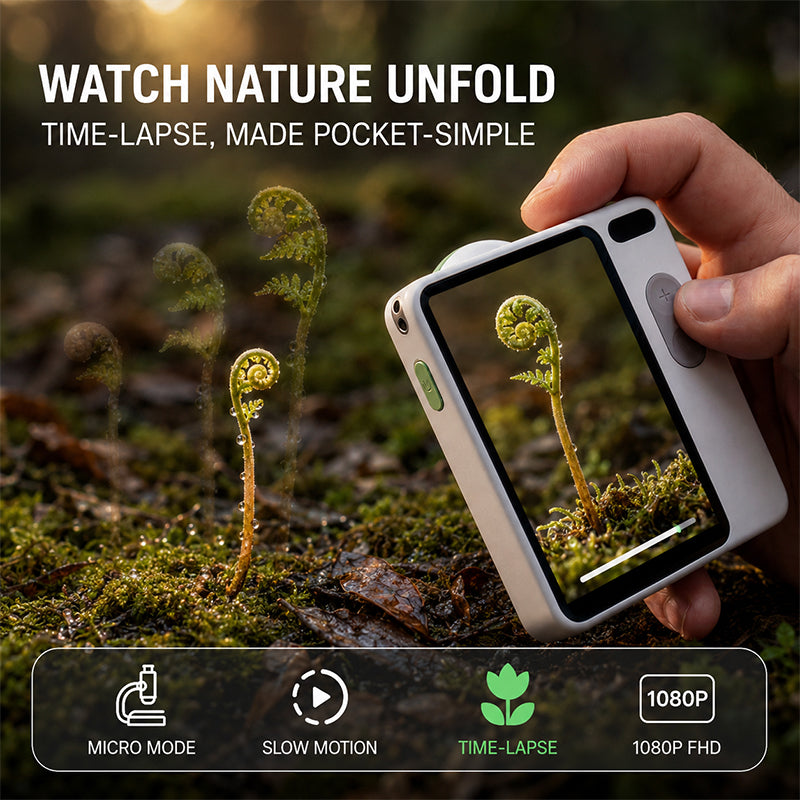
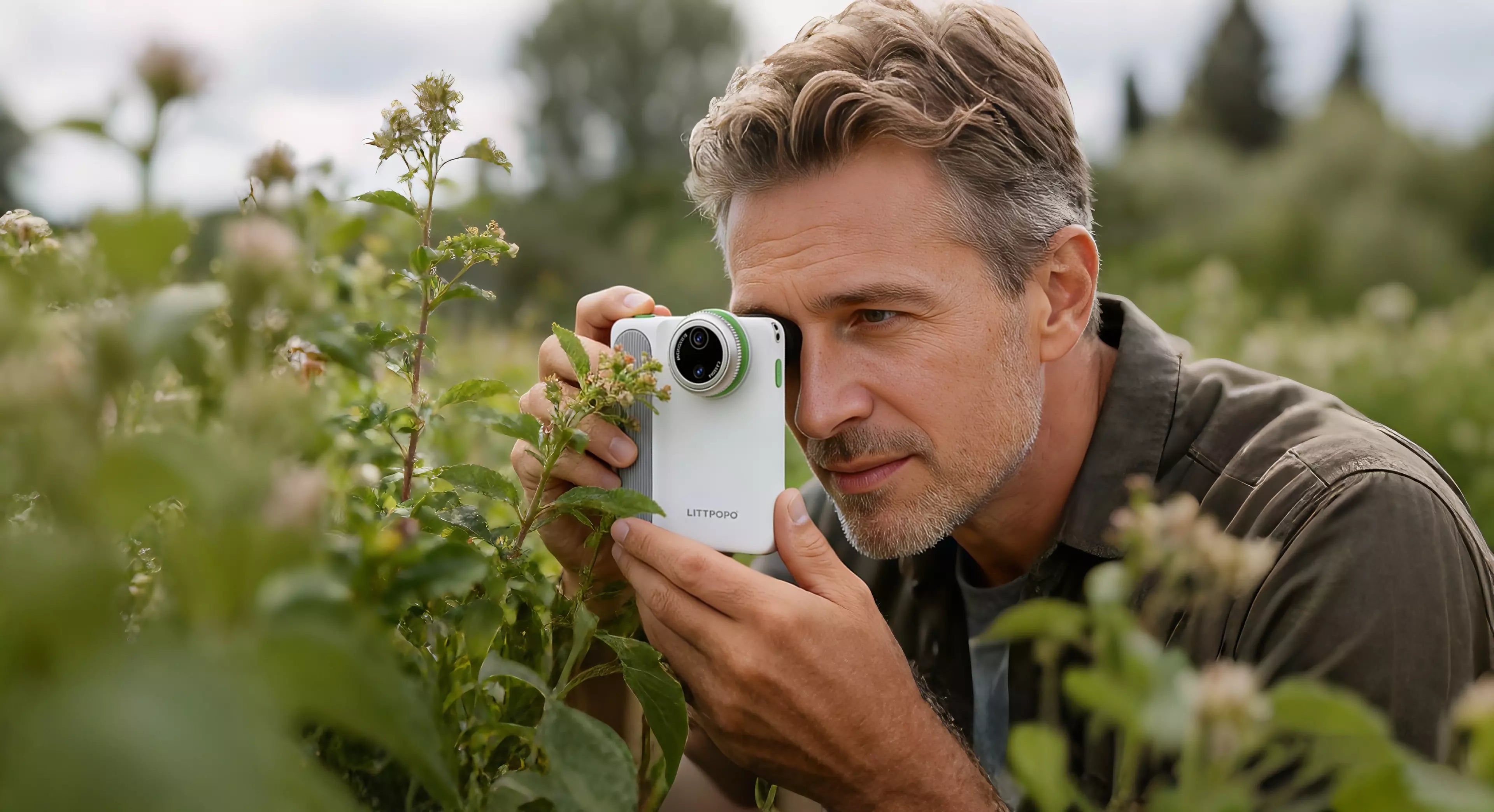
To document this hidden world on site without carrying heavy tabletop lab gear, packing an ultra-portable microcam in your trail vest introduces a completely fresh layer of scientific discovery. High-end pocket systems eliminate the handling friction of old-school science gear by replacing stiff mechanical dials with intelligent, screen-interactive auto-focus—you simply tap the integrated screen to lock your focus plane instantly. Hand tremors are naturally absorbed by protective lens guards that rest flush against your subject, providing a rock-solid, stable platform for crisp imaging. With an integrated 180-degree twisting dual-camera design, you can capture a standard wide shot of a habitat and immediately shift the optics to analyze organic structures under 400x zoom in sharp 4K detail, documenting nature's hidden nocturnal architecture without ever removing a specimen from the trail.
Tactical Habits for Clean Low-Light Output
No matter how advanced your camera or lens combination is, mastering the physical craft of low-light shooting is what ultimately determines the quality of your portfolio. Next night shoot – remember these important field habits:
Don’t chase upgrades – chase skill and technique: Spending thousands on hardware upgrades is never as valuable as spending time learning manual exposure control, understanding hyperfocal distance calculations and developing rock-solid tripod workflows. Expand your tracking knowledge – it’s always a better long-term strategy than chasing spec-sheet numbers.
Leverage Professional Education Networks: If you run into technical difficulties in controlling shadow noise or focal alignment in the dark, seek guidance from reliable industry networks such as Sony Alpha Universe or DPReview. Studying their technical tutorials and real-world image comparisons will drastically shorten your learning curve.
Take Control via Manual Focus Lock: While modern autofocus arrays are incredibly responsive, low-contrast night skies can still cause systems to waver. Learn to switch your lens to manual mode, use your camera screen's digital magnification tool to zoom in on a bright star or distant city light, and dial in your focus manually to ensure absolute, tack-sharp precision before hitting the shutter.
Final Thoughts
The ideal setup for tracking the world after dark is entirely dependent on where you choose to look. If your goal is documenting the kinetic energy of midnight city streets, a fast 35mm prime is your ultimate companion; if your gaze is fixed entirely on the cosmos, a specialized, low-distortion 20mm or 24mm lens is mandatory. By pairing a responsive full-frame sensor with ultra-bright, wide-aperture glass and disciplined field tactics, the night stops being a technical barrier—and instead becomes an open canvas for artistic discovery.