
Nature photography has a way of changing how you see the world. One day you're photographing a colorful bird perched on a distant branch, and the next you're kneeling beside a wildflower, fascinated by details you've never noticed before. The challenge, however, is finding a camera that can keep up with your curiosity without becoming a burden.
Most outdoor lovers discover very quickly that carrying a DSLR or mirrorless camera system is not always practical. Professional camera bodies, telephoto lenses, tripods, and accessories can easily turn a hike meant to be relaxing into a workout. Although those systems undoubtedly produce exceptional quality images, they are not always the best choice for casual nature lovers, tourists, students, or anyone who just wants to enjoy the outdoors without carrying several pounds of gear.
Modern point-and-shoot cameras are precisely the kind of devices in which camera-nature enthusiasts will find new highlights today. They are small and light, and when used for the right kind of photography, they can give results that artists will be impressed with. However, it is a matter of finding the one that suits your interest, be it photographing birds, flowers, insects, or landscapes, or your compositions are a little bit of everything.
What Nature Photographers Really Need
Before looking at specific camera models, it is helpful to keep in mind what makes nature photography different from other genres. Wildlife photographers usually require a long zoom to capture birds and animals without scaring them away. Flower photographers are most concerned about getting crisp details and accurate colors. Macro photographers work most of the time with very close subjects in order to uncover the textures, patterns, and even the smallest organisms, which are not visible to the naked eye.
Hillwalkers also often wish to have a camera capable of going with them to different places during the same day. It would be quite normal to begin shooting a butterfly resting on a leaf, to gape at the landscape, and finally to step on a hidden insect under the rock. The best camera for nature photography is the one that inspires you to explore when carrying it should be no problem, and it should also be a pleasure to operate for you.
Littpopo MicroCam X1: The Most Unique Nature Camera of 2026

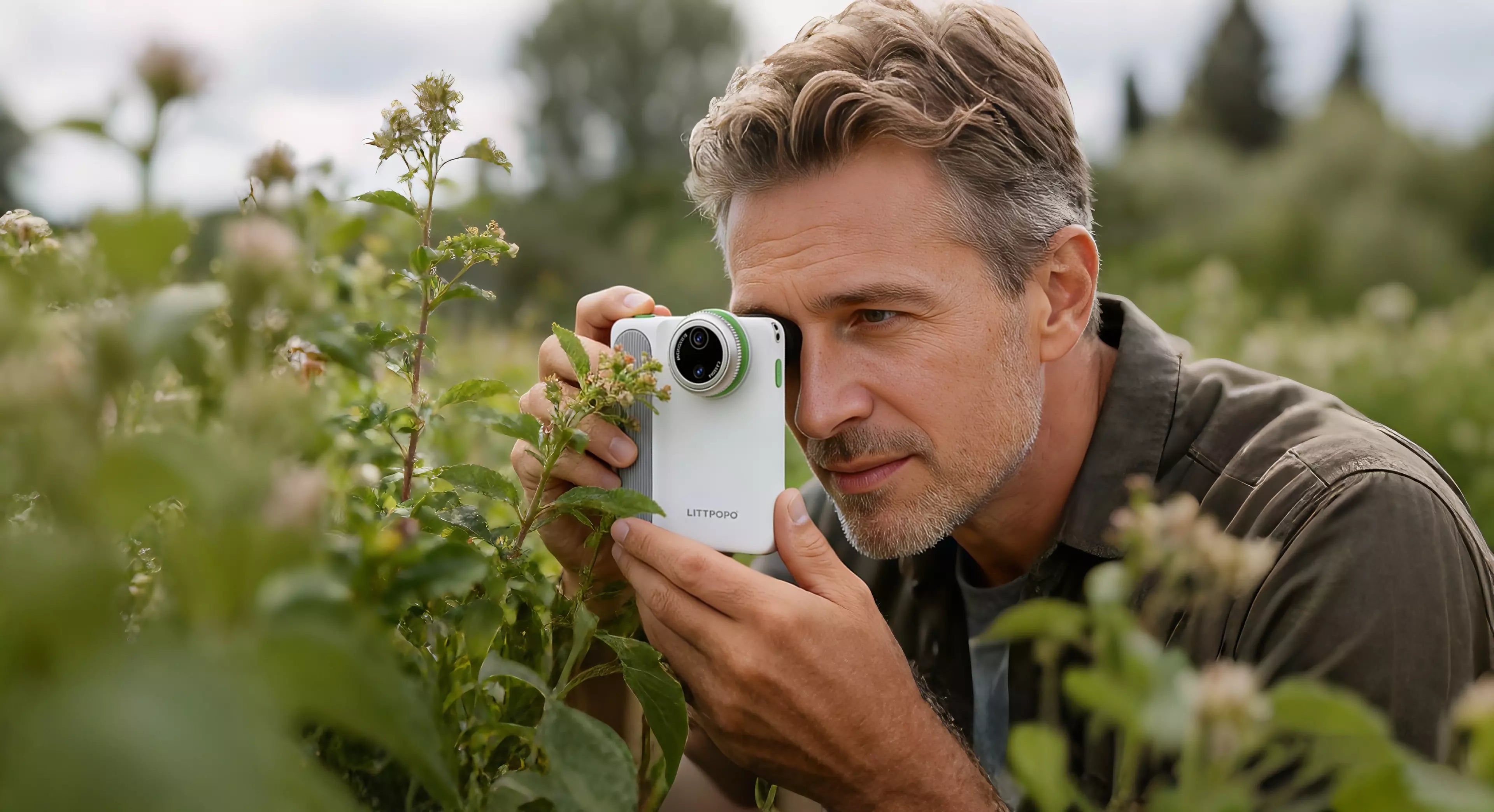
The Littpopo MicroCam X1, one of today's compact cameras, is quite a rarity since it caters to nature photography in a completely different way. While most cameras zoom in on distant subjects, MicroCam X1 aims at unveiling beauty that is literally under one's nose but often hidden from the eye.
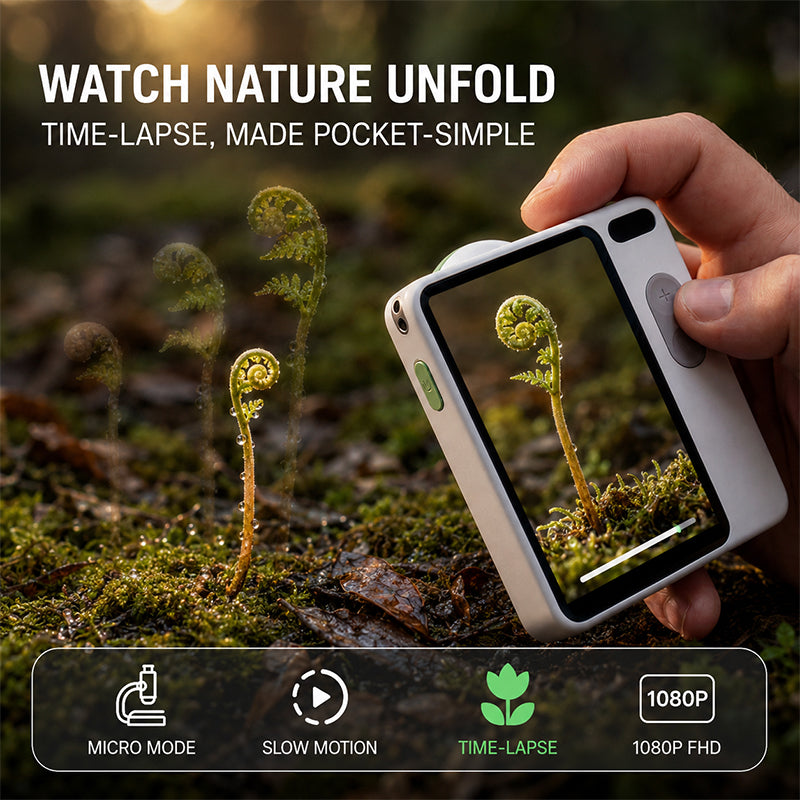
With microscope-level functioning, the MicroCam X1 is an excellent tool for nature photographers to discover not only the beautiful but also the hidden side of nature: the vein network of a leaf, the cracked bark of a tree, the surface of flower petals and the delicate features of insects, which are actually great subjects for photography. If you like to find out even the smallest details of nature, this camera provides a creative experience that other compact cameras cannot even come close to.
Besides the camera becoming increasingly portable, it only weighs a fraction of a DSLR kit and so it can very easily be a companion to your backpack or jacket pocket. This makes it a perfect partner for hiking trails, nature walks, camping trips, botanical gardens, and outdoor educational activities.
Along with a camera that supports 4K video, this camera allows users to record their discoveries in great detail. Content creators, educators, and hobbyists will love the option to capture both photographs and videos of nature at the same time.
Who Should Buy the MicroCam X1?
The MicroCam X1 is great for:
-
Macro photography lovers
-
Nature and outdoor adventures
-
Insect and butterfly explorers
-
Students and teachers
-
Gardeners and plant enthusiasts
-
Outdoor content developers
However, if your favorite nature subjects are flowers, leaves, fungi, insects, minerals, and textures, perhaps the Littpopo MicroCam X1 is in fact one of the most fascinating cameras of 2026 that you will get to use.
Sony RX100 VII, Best Premium All-Around Camera

The Sony RX100 VII is still among those very few top-notch premium point-and-shoot cameras available in the market nowadays. Its compact body is capable of providing excellent picture quality, autofocus that is very quick and quite a high-performance level overall.
Those photographers who like capturing landscapes, doing travel photography, and general outdoor shooting would find in the RX100 VII a very versatile solution. Among other advantages is the fact that its camera comes with a larger sensor that produces cleaner images as compared to many traditional compact cameras, especially under difficult lighting conditions.
It should be noted, though, that while the Sony RX100 is an excellent general-use camera, it does not have the level of close-focus capabilities that make the MicroCam X1 so fascinating for those who love macro cameras for nature photography.
Panasonic Lumix FZ80D, Best for Bird Photography
Bird photography is a whole new ball game when it comes to photography with the methods you typically use for macro photography being totally unsuitable for this type of photography. The variety of subjects will be greater in terms of the variety of animals and birds you will encounter. Also, the birds will be not only distant but their movements will be random and they will be very fast. The Panasonic Lumix FZ80D, with its capable zoom lens, resolves the issues and challenges that photographers face by enabling distant wildlife to be seen up close with optical quality.
For birdwatchers and wildlife enthusiasts, the FZ80D offers tremendous value. It is a zoom range that makes it especially useful in the parks, wetlands, forests, and other outdoor environments where it is not possible or advisable to approach the animals.
On the other hand, it has neither the extreme close-focusing capability of the MicroCam X1, nor can it produce premium image quality like the Sony RX100 VII.
Which is the Best Camera for You?

It all boils down to what aspects of nature photography you are most enthusiastic about when making a decision to choose one model over another.
In case your main concern is bird and wildlife photography along with distant subjects, the Panasonic Lumix FZ80D is your best shot. Wanting a travel and general photography camera that gives premium image quality in a compact body? Then the Sony RX100 VII is the answer.
On the other hand, if you are more of a slow and steady type who admires the tiniest details often totally ignored by most people, such as insect wing patterns, leaf textures, flower structures, and hidden beauties of the natural world, then the Littpopo MicroCam X1 is indeed your piece of cake.
Final Recommendation
Many cameras help you photograph nature. Few cameras help you discover it.
That is what makes the Littpopo MicroCam X1 stand out in 2026. Rather than focusing on faraway subjects only, it encourages its users to look at nature in an entirely new way through close-up observation and creative macro photography. Apart from its incredibly light nature, this camera's unique imaging features make it the kind of experience that one would find both highly educational and rewarding.
Zoom cameras may still remain the first choice of bird watchers, whereas premium compact models still represent very good options for those who do all-around photography. But if you are the kind of photographer who enjoys uncovering the hidden details of plants, insects, flowers, and outdoor environments, then the Littpopo MicroCam X1 is one of those point-and-shoot cameras that are not only very distinctive but also very enjoyable to use.