
The Best Travel Camera Is The One You Actually Carry

I remember one of my first serious trips for outdoor photography. Hours spent packing my camera bag – spare lenses, batteries, a tripod, cleaning kits and accessories. The photos were beautiful, but there was one problem – the camera was so heavy that I missed a lot of moments just because I didn’t want to take it out.
That experience changed the way I think about travel photography.
The best travel camera isn’t always the one with the biggest sensor, the most expensive lens or the most professional-looking body. The best travel camera is the one you can carry comfortably, grab quickly and trust when a special moment pops up.
Whether you’re hiking in a forest, watching wildlife in the mountains, visiting a tropical island, or walking in an unknown city, travel photography is all about being prepared.
2026 offers travellers more options than ever. Premium compacts, action cams, mirrorless systems and quirky pocket cameras are all vying for attention. But which is the best to take on your next adventure?
After analyzing user reviews, photographer recommendations, and real-world experiences, here are the best travel cameras of 2026.
What Makes the Best Travel Camera in 2026?
It’s good to understand what really matters when you’re traveling before you pick a camera.
A camera that does well in a studio may not be the best choice in the outdoors.
I think the most important things for travel photography are:
1. Portability: Will You Carry It Every Day?
Weight is the worst enemy of travel photography.
A camera inside your backpack cannot capture memories.
The best cameras for travel should be:
- Lightweight
- Small enough to carry every day
- Easy to get at fast
- Comfortable for long journeys
That is why compact cameras have become so popular again. Instead of a big setup that is only used occasionally, many photographers are opting for a smaller camera that they can bring everywhere they go.
2. Image Quality: More Than Just Megapixels
A good travel camera needs to handle different environments:
- Light landscapes
- The Dark Streets
- Fast-moving animals
- Close-up details
- Weather changes
There are many factors that influence image quality:
- Sensor size
- Lens quality
- Autofocus performance
- Image stabilization
- Color processing
And a 50MP camera isn’t always better if it can’t capture the shot when it counts.
3. Capability To Capture Nature And Wildlife
For outdoor photographers, travel is not just about famous landmarks.
Sometimes the best photos are little revelations:
A butterfly resting on a flower.
The texture of moss on an old tree.
Little patterns in the crystal.
A bird appearing between the branches.
A good travel camera should allow you to capture the world at large and the world within.
The 7 Best Travel Cameras in 2026 (Photographer Recommended Ranking)

1. Sony RX100 VII — Best Premium Compact Travel Camera
The Sony Cyber-shot RX100 VII is still one of the most recommended compact travel camera among photographers who want the best image quality in a pocket-sized body.
Its biggest advantage is versatility.
The camera combines:
- 20.1MP 1-inch sensor
- 24-200mm equivalent zoom lens
- Great auto focus system
- 4K video recording
- Ultra compact design
The RX100 VII is astonishingly capable for photographers shooting everything from city streetscapes to faraway landscapes.
Pros:
✓ Great image quality
✓ Reliable autofocus
✓ Real pocketability
✓ Good zoom range
Cons:
✗ More expensive than other compact cameras.
✗ Body is small, can be uncomfortable for long shooting sessions
Best For:
A dream of a traveler in search of pro-quality pictures without the bulk of interchangeable lenses.
2. Fujifilm X100VI — Best Travel Camera for Street Photography
The Fujifilm X100VI is one of the most discussed cameras in the community of travel photographers.
The reason is simple: It makes photography fun.
Fujifilm is loved by many photographers because of its famous film simulation modes that produce beautiful colors right out of the camera.
What the X100VI has:
- 40.2MP APS-C sensor
- Fixed 23mm f/2 lens
- Built-in image stabilization
- Traditional Rangefinder Layout
This camera just feels right to walk around a new city with. It forces you to slow down, to notice things and to capture real moments.
Pros:
✓ Beautiful colors
✓ Premium design
✓ Excellent image quality
✓ Great for street and lifestyle photography
Cons:
✗ Fixed lens limits flexibility
✗ Hard to find because of high demand
Best For:
Travelers who love storytelling, architecture, and street photography.
3. Canon PowerShot G7 X Mark III — Best Point-and-Shoot Travel Camera
For those looking for something simple and reliable in travel, the Canon PowerShot G7 X Mark III remains a popular choice.
The G7 X Mark III is about convenience, not the constant tweaking that professional cameras demand.
It offers:
- 20.1MP 1-inch sensor
- 4K video
- Flip-up touchscreen
- Small body
For travel vloggers and casual photographers, it provides a great balance between quality and simplicity.
Pros:
✓ Easy to use
✓ Lightweight
✓ Quality picture
✓ Perfect for travel videos
Cons:
✗ Autofocus isn’t as advanced as newer rivals
✗ Limited zoom range
Best For:
Travelers who want a simple camera that will outperform a smartphone.
4. DJI Osmo Pocket 3 — Best Pocket Camera for Travel Videos
DJI Osmo Pocket 3 changed the way many travelers create videos.
Stability is the biggest strength.
The built-in 3-axis gimbal creates smooth footage while walking, hiking, or exploring.
Key features:
- 1-inch CMOS sensor
- 4K/120fps slow motion
- Rotating touchscreen
- Greater stabilization
For adventure creators, this camera is almost effortless to use.
Pros:
✓ Amazing stabilization
✓ Very portable
✓ Great video quality
Cons:
✗ More video than photography orientated
✗ Not ideal for wildlife or detailed macro shots
Best For:
Travel vloggers and creators focused on video storytelling.
 5. GoPro HERO13 Black — Best Travel Camera for Adventure Seekers
The GoPro HERO13 Black has established itself as one of the most durable travel cameras around. If your adventures include kayaking, mountain biking, skiing, snorkeling or just unpredictable weather, it’s hard to beat.The HERO13 Black is designed to survive environments that other compact cameras simply can’t, unlike traditional compact cameras.Its standout features include:
-
5.3K video recording
-
Excellent HyperSmooth stabilization
-
Waterproof construction
-
Rugged and compact body
One thing I like about the GoPro is the confidence it gives you. You put the camera out of your mind and concentrate on the adventure.
Pros
✓ Waterproof without an extra housing
✓ Super durable
✓ Excellent stabilization
✓ Small enough for any backpack
Cons
✗ Limited image quality in low light due to small sensor
✗ Not ideal for wildlife photography or optical zoom
Best For
Adventurers, hikers, divers, cyclists and extreme sports lovers.
6. OM SYSTEM OM-5 — Best Travel Camera for Wildlife & Nature Photography
OM System OM-5 is one of the most underrated travel cameras for outdoor photographers.
It’s a stunning compromise between portability and professional performance, which is why it’s favored by many wildlife photographers.
Some highlights include:
- Weather-sealed magnesium alloy body
- Excellent in-body image stabilization
- Lightweight Micro Four Thirds system
- Wide range of compact telephoto lenses
If shooting birds, deer, waterfalls, forests or national parks are on your itinerary OM-5 is a great companion.
One thing I really like about it is its weather sealing. Sometimes nature is not perfect, and possessing a camera that can handle light rain or dusty trails offers peace of mind.
Pros
✓ Lighter than full frame systems
✓ Good stabilisation
✓ Great stabilization
✓ Ideal for wildlife photography
Cons
✗ Smaller sensor than APS-C or full-frame cameras
✗ Need for interchangeable lenses
Best For
Nature photographers who do a lot of hiking or travel far.
7. Littpopo MicroCam X1 — Best Travel Camera for Discovering the Hidden World
Every place you go has two stories to tell.
The first is the one everyone sees.
The second is the one most people walk past without ever noticing.
One day I was hiking in the forest and I was crouched down next to a fallen log. Others may have admired the towering trees, but I was more taken by the tiny ecosystem thriving below—the delicate mosses, the miniature fungi, the insects no bigger than a grain of rice. I just couldn't capture those intricate details with my normal travel camera. It was just not built for this kind of close-up exploration.
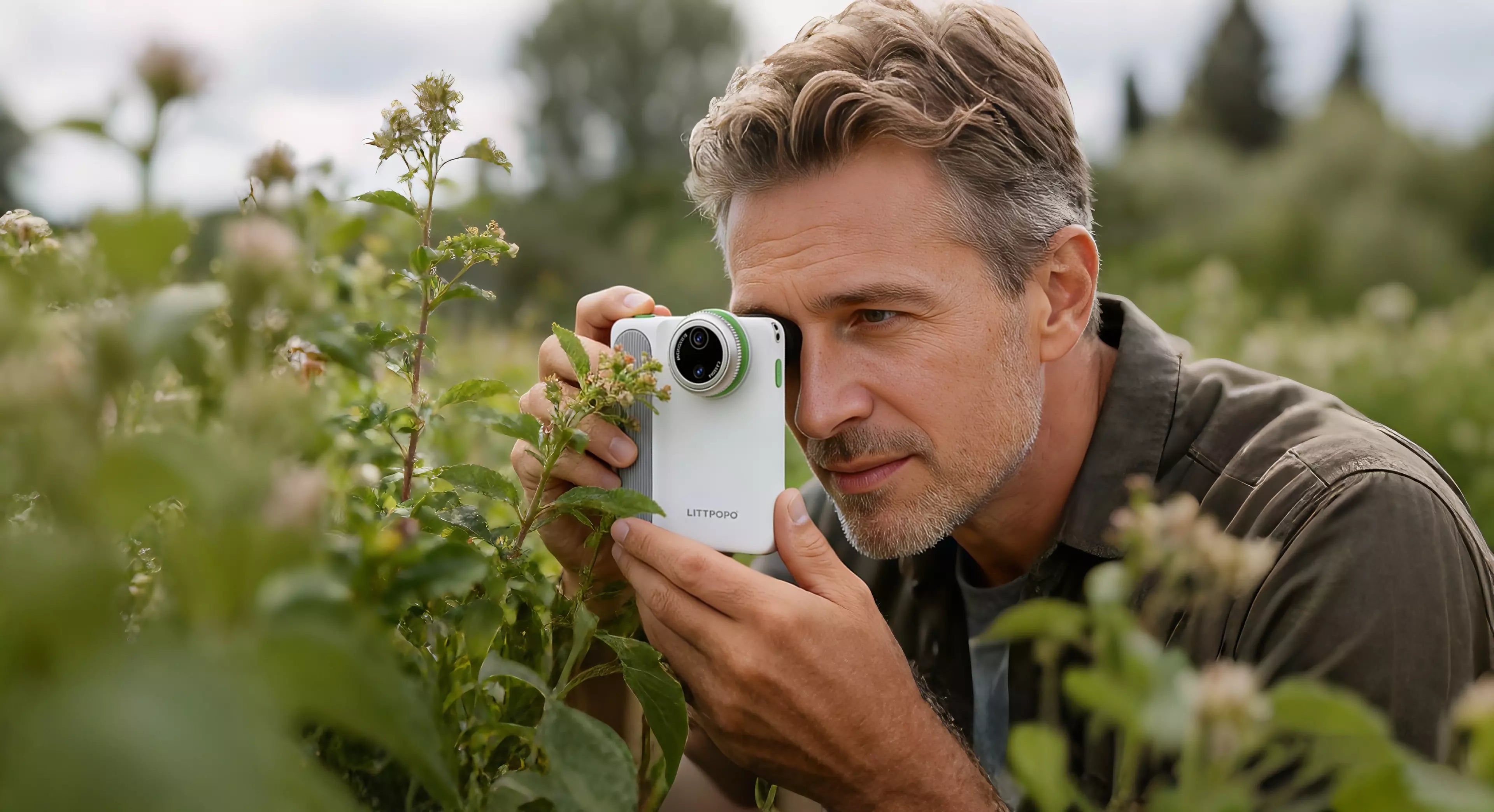
That's where the Littpopo MicroCam X1 feels genuinely different.
It doesn’t compete directly with high-end mirrorless cameras, but it offers something few travel cameras do: the ability to transition seamlessly between everyday travel photography and exploring an entirely different scale of the natural world.
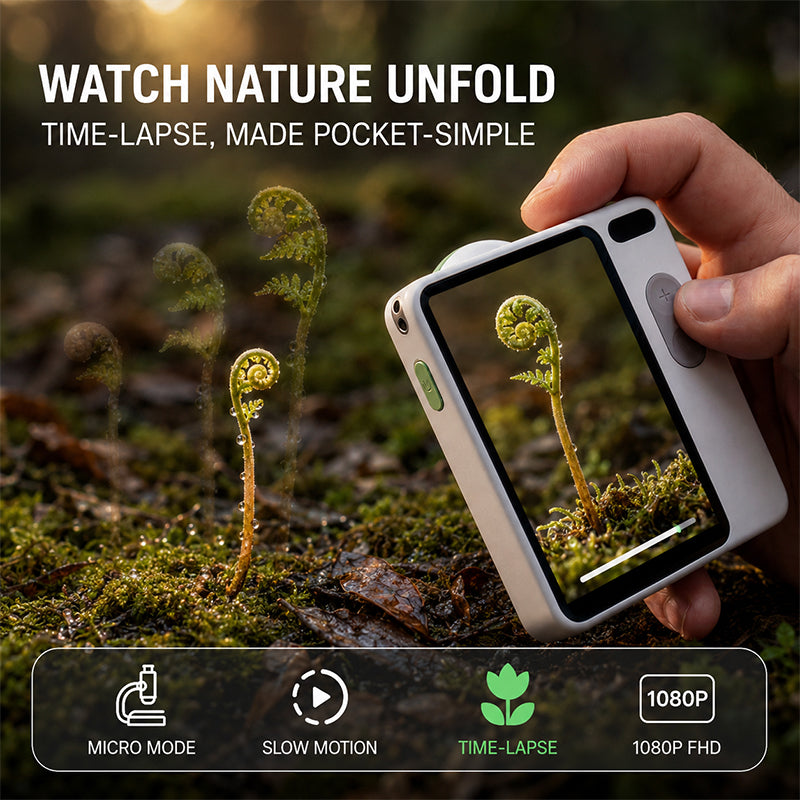
The rotating lens design lets you take scenic landscapes one moment, then get a close-up look at the intricate textures of leaves, insects, flowers, minerals or tree bark the next — without carrying extra macro lenses.
Some of its standout features include:
- 4K video recording
- 12MP still photos
- Microscope Mode for capturing incredibly fine details
- Pocket-sized design that's easy to carry on every trip
“It’s a whole new way for hikers, campers, nature walkers, or just the curious to see old places.”
It’s not going to replace a professional wildlife camera with a 600mm telephoto lens, nor is it meant to. Instead, it enhances the traditional travel photo by showing details that are often invisible to the naked eye.
If you enjoy exploring nature as much as you enjoy taking photos of it, the MicroCam X1 offers you a perspective few other cameras can match.
Pros
✓ Small and light
✓ Captures both landscapes and microscopic details
✓ No Need for Additional Macro Lens
✓ Excellent value for nature lovers
Cons
✗ Not ideal for long distance wildlife photography
✗ Not quite as high resolution as the premium interchangeable lens cameras
Best For
Nature lovers, macro photography beginners, teachers, campers, outdoor enthusiasts and curious travellers who want to discover the hidden details of every destination.
Travel Camera Comparison Table
| Camera | Best For | Strengths | Considerations |
|---|---|---|---|
| Sony RX100 VII | Premium travel | Excellent image quality, fast autofocus, versatile zoom | Premium price |
| Fujifilm X100VI | Street photography | Beautiful colors, compact, enjoyable shooting experience | Fixed lens |
| Canon G7 X Mark III | Everyday travel | Lightweight, beginner-friendly, strong video | Limited zoom |
| DJI Osmo Pocket 3 | Travel video | Outstanding stabilization, compact | Photography is secondary |
| GoPro HERO13 Black | Adventure travel | Rugged, waterproof, action-ready | Smaller sensor |
| OM SYSTEM OM-5 | Wildlife & nature | Weather sealing, stabilization, interchangeable lenses | Higher system cost |
| Littpopo MicroCam X1 | Nature exploration & macro | Super Macro Mode, pocket-sized, unique close-up capability | Not intended for long-range telephoto photography |
How to Choose the Best Travel Camera

Choosing the best travel camera isn't about buying the most expensive model—it's about choosing the one that matches the way you travel.
Here's a simple guide:
If you want premium image quality in a compact body, the Sony RX100 VII is the one to get.
If you are into street photography and beautiful colors, then get the Fujifilm X100VI.
If you want an easy to use, reliable all-round travel companion, go for the Canon G7 X Mark III.
If you are after cinematic travel videos, then the DJI Osmo Pocket 3 is the one to go for.
If you’re planning to hit the water, mountains or action sports, the GoPro HERO13 Black is your best bet.
If wildlife and landscapes are your main focus, go for the OM SYSTEM OM-5.
If you like to find insects, flowers, leaves, fungi, crystals and the details that most travelers never see, then choose the Littpopo MicroCam X1.
Ultimately, the best travel camera is the one that inspires you to get out and do more, and helps you document the moments that matter most.
Why Compact Travel Cameras Are Making a Comeback
Smartphone cameras are stronger than ever, but they still have some boundaries.
Benefits of dedicated travel cameras include:
- Improved picture quality
- Better stabilization
- Longer battery life
- More creative control
- Specialized shooting capabilities, including microscope photography and long-range telephoto imaging
The compact camera is perfect for image quality and portability and that is why many photographers are choosing them now. Because a camera that you always have with you is often more valuable than one you left in the hotel room.
If you are also looking for smaller travel-friendly options, don't miss our guide to Best Compact Cameras for Travel Photography.
Frequently Asked Questions
| Questions | Answers |
|
What is the best travel camera in 2026? |
There isn't a single best camera for everyone. The ideal choice depends on your travel style. For overall versatility, the Sony RX100 VII remains one of the strongest options. For outdoor exploration and macro photography, the Littpopo MicroCam X1 offers a unique experience that few cameras can match. |
|
Are compact cameras better than smartphones for travel? |
In many situations, yes. Compact cameras generally provide better optics, improved image stabilization, longer battery life, and greater creative flexibility. Some models also offer features—such as advanced zoom or super macro capabilities—that smartphones cannot replicate. |
|
What is the best camera for wildlife photography while traveling? |
If wildlife is your primary subject, the OM SYSTEM OM-5 is an excellent choice thanks to its lightweight system, weather sealing, and access to compact telephoto lenses. |
|
Can one travel camera capture both landscapes and macro subjects? |
Most travel cameras excel at either wide scenes or close-up photography, but rarely both. That's one reason products like the Littpopo MicroCam X1 stand out—they make it easy to switch between capturing scenic landscapes and revealing tiny natural details without carrying extra macro accessories. |
Final Thoughts
The best travel camera isn't defined by its price tag or the number of megapixels it offers. It's the camera that encourages you to explore, notice more, and capture moments that truly matter.
Whether you're wandering through ancient cities, hiking forest trails, or stopping to admire a butterfly resting on a leaf, every journey tells a story. Some cameras help you remember the places you've been. Others help you discover things you never realized were there.
Choose the camera that matches the way you travel, and you'll bring home more than beautiful photos—you'll bring home experiences worth revisiting for years to come